When fire, flooding, storms, or another disaster impacts your property, every moment matters. You need an experienced restoration partner capable of responding quickly, managing complex losses, and helping you safely resume operations.
That is where Legacy Restoration comes in.
Large-Loss Restoration Built Around Your Needs
Legacy Restoration specializes in large-loss recovery for commercial properties, multifamily communities, military housing, and institutions. Our team brings the equipment, experience, and coordination needed to handle demanding restoration projects with speed and precision.
Supporting Military Communities
After a disaster, military families and personnel need to know their homes are safe. Legacy Restoration helps restore damaged base housing so residents can return home as quickly and safely as possible.
Restoring Multifamily Properties
Fire, storm, and water damage can displace residents and create significant challenges for property managers and HOAs. We restore large-scale multifamily properties while helping stakeholders navigate the recovery process and minimize disruption.
Helping Businesses Get Back to Work
For commercial properties, downtime can mean lost revenue and interrupted operations. Our team works efficiently to stabilize damage, develop a clear restoration plan, and help businesses move forward.
Prepared for Complex Restoration Projects
With advanced restoration equipment, an experienced team, and a nationwide fleet, Legacy Restoration is equipped to respond to even the most complex large-loss events.
Watch our company overview video to learn how Legacy Restoration helps businesses, communities, and institutions recover when disaster strikes.
When the unexpected happens, trust the experts who get the job done right. Contact Legacy Restoration to learn more about our large-loss recovery services.
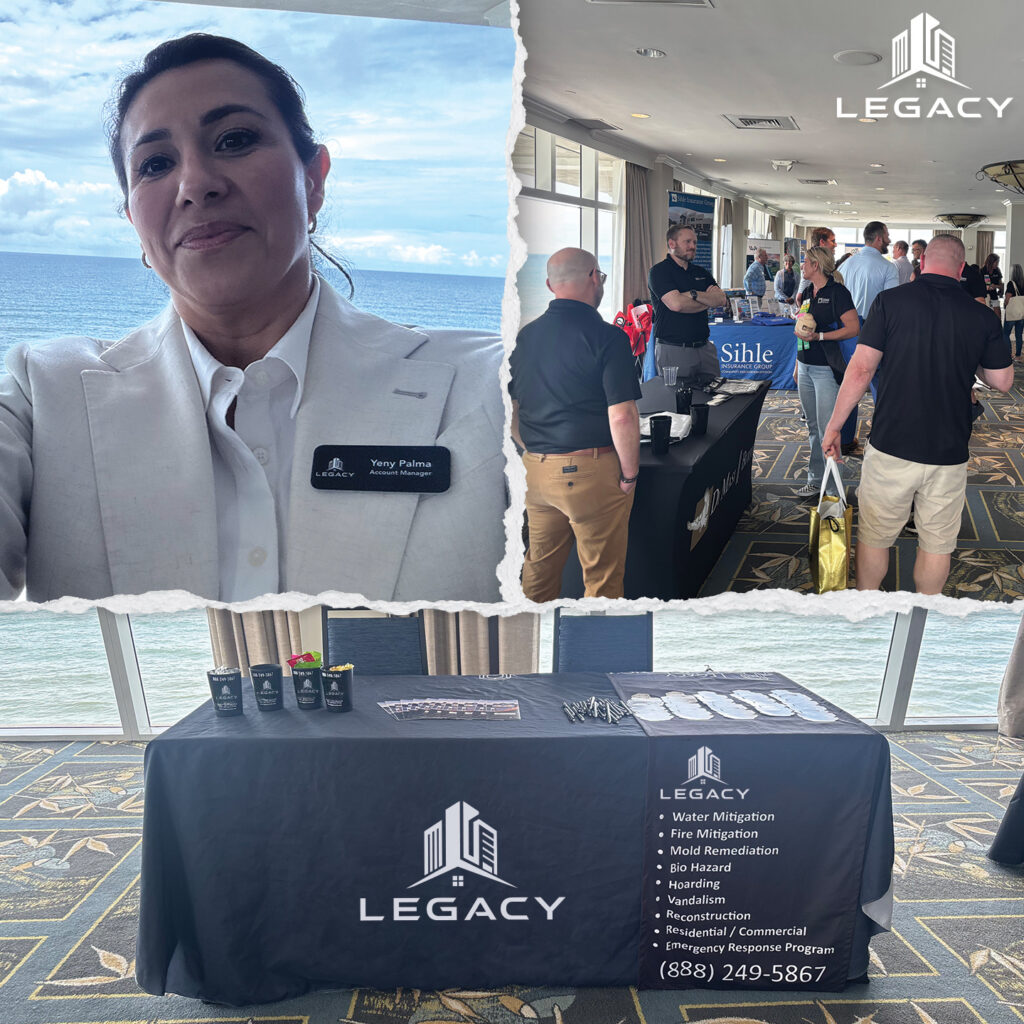
Legacy Restoration recently joined Leland Property Management for a day of networking, relationship-building, and connection with property management professionals.
Building Stronger Industry Relationships
Legacy team members Yeny Palma and Daniel Peterson represented the company during a productive trade show, connecting with attendees and discussing the restoration needs of commercial and multifamily properties.
Following the trade show, approximately 150 guests gathered for an evening reception. The relaxed setting provided additional time to strengthen professional relationships and connect with members of the Leland community.
Events like this help our team better understand the needs of property managers and reinforce our commitment to responsive, dependable service.
“Strong partnerships begin with genuine connections and a shared commitment to the communities we serve.”
Thank you to Leland Property Management for bringing everyone together. We appreciated the opportunity to connect with fellow industry professionals and represent Legacy Restoration.
Wildfire damage does not stop at the fire line. Smoke, soot, ash, and airborne residue can enter properties miles from visible flames, settle on surfaces and contents, move through HVAC systems, and leave persistent odors even when a building has no direct burn damage.
Following the Aspen Acres Fire in Southern Colorado, Legacy Restoration has been supporting communities in Rye, Beulah Valley, and surrounding areas with property assessments, smoke and soot cleanup, odor control, air filtration, and recovery documentation.
Hidden ImpactSmoke and fine particles can enter buildings without direct flame damage.
Professional AssessmentConditions should be evaluated before widespread cleaning begins.
24/7 ResponseLegacy supports residential, commercial, and multifamily recovery.
Aspen Acres Fire Recovery in Southern Colorado
The Aspen Acres Fire began on June 29, 2026, near Rye and spread through parts of Custer and Pueblo counties. The fire forced evacuations in communities including Beulah, Rye, Colorado City, and San Isabel. By late July, the incident had burned approximately 101,900 acres and become the seventh-largest wildfire by acreage in Colorado history.
Behind those numbers are thousands of residents, businesses, and property owners facing different levels of impact. Some properties sustained direct fire damage. Others were exposed to dense smoke, windblown ash, soot, and odors that traveled well beyond the burn perimeter.
Legacy Restoration’s Colorado Wildfire Response
Legacy’s team has been on the ground in Rye, Beulah Valley, and surrounding communities, meeting with homeowners, businesses, and insurance professionals. Response support includes property assessments, smoke and soot cleanup, odor control, air filtration, and documentation to help affected property owners understand the next steps.
A Property Can Have Wildfire Damage Without Burning
Wildfire smoke is a complex mixture of gases and fine particles. According to the U.S. Environmental Protection Agency, outdoor smoke can enter buildings and affect indoor air quality. Ash and soot may also settle on surfaces and become airborne again when disturbed.
Smoke and Soot Residue
Fine residue can settle on walls, ceilings, floors, furnishings, electronics, and stored items. Improper cleaning can spread soot, drive it deeper into porous materials, or create permanent staining.
Persistent Wildfire Odors
Smoke odor can remain in drywall, insulation, carpet, upholstery, wood, and other porous materials. Fragrance or surface cleaning may temporarily mask the smell without removing its source.
HVAC Contamination
Heating and cooling systems can circulate fine particles through a property. Filters, return-air pathways, equipment, and accessible ductwork may need to be evaluated based on the level of exposure.
Contents and Material Damage
Smoke exposure can affect furniture, textiles, documents, inventory, and personal belongings. Materials respond differently, so cleaning methods should be selected according to the item and residue involved.
The Colorado Department of Public Health and Environment explains that wildfire smoke, ash, and soot can deposit fine particles and other compounds on walls, floors, furniture, and additional surfaces. Thorough cleaning and appropriate air filtration may be needed even when structural fire damage is not visible.
What to Do After Wildfire Smoke or Ash Affects Your Property
1
Follow Official Reentry and Safety Instructions
Do not return until local authorities say the area is safe. Watch for unstable trees, damaged utilities, compromised structures, hot spots, debris, and changing weather conditions. Call 911 for an immediate life-safety emergency.
2
Document Conditions Before Cleaning
When it is safe, photograph visible ash, soot, staining, damaged materials, affected rooms, HVAC components, and contents. Create a written list of odors, residue, and areas of concern. Clear documentation can help establish the scope of damage and support insurance conversations.
3
Limit the Spread of Residue
Avoid carrying ash into clean areas on shoes, clothing, tools, or belongings. Keep occupants away from heavily affected rooms and avoid unnecessary activity that could make settled particles airborne.
4
Have the Property Professionally Assessed
A restoration assessment can identify visible and less obvious areas of impact, determine which materials may be cleaned or removed, evaluate odor sources, and establish a practical scope of work before cleanup begins.
5
Notify Your Insurance Carrier
Report the loss promptly and ask what documentation is required. Coverage varies by policy and circumstances. A restoration company can document physical conditions and completed work, but coverage decisions remain with the insurance carrier.
Avoid These Common Cleanup Mistakes
Do not dry sweep or dust ash. This can push fine particles back into the air.
Do not use a standard household or shop vacuum on ash. The EPA recommends a HEPA-type vacuum for dusty surfaces.
Do not aggressively scrub soot. The wrong pressure or cleaning chemistry can smear residue and worsen staining.
Do not immediately run an affected HVAC system without evaluation. It may circulate contaminants into additional areas.
Do not rely on fragrance to solve smoke odor. Effective deodorization begins by identifying and treating the contamination source.
Do not use ozone generators in occupied spaces. CDPHE warns that ozone is toxic to breathe.
How Professional Wildfire Smoke Damage Restoration Works
No two properties experience wildfire exposure in exactly the same way. The restoration plan should reflect the type of residue, affected materials, building layout, occupancy, HVAC configuration, and severity of impact.
Phase
What It May Include
Assessment
Visual inspection, affected-area mapping, residue and odor evaluation, photo documentation, and identification of immediate safety concerns.
Stabilization
Board-up, tarping, access control, removal of unsafe debris, or other measures needed to protect the property from additional damage.
Cleaning
Targeted smoke and soot removal from structural surfaces, fixtures, and salvageable contents using methods appropriate for each material.
Air Filtration
HEPA air filtration and air-quality control measures designed to capture airborne particles while cleaning is underway.
Odor Control
Source removal, cleaning, and professional deodorization selected according to the affected materials and level of smoke penetration.
Documentation
Photos, condition notes, work records, and repair recommendations that help owners and insurance professionals understand the loss.
Reconstruction
Repair or replacement of materials that cannot be restored, coordinated through the final walkthrough when rebuilding is required.
Residential, Commercial, and Multifamily Wildfire Recovery
Wildfire recovery affects every property differently. A homeowner may need help evaluating smoke odors, contents, and indoor surfaces. A business may need phased cleanup to reduce downtime. A multifamily property may require consistent documentation and communication across multiple units, shared systems, owners, tenants, and insurance contacts.
Legacy Restoration supports homeowners, businesses, property managers, HOAs, and multifamily communities with locally based teams and full-service restoration capabilities. Our Colorado team coordinates assessment, mitigation, cleanup, documentation, and reconstruction with one point of accountability throughout the project.
Incident note: Fire statistics in this article reflect public incident reporting available in late July 2026. Conditions and official totals may change. For active evacuation, road, weather, or fire-safety information, follow local emergency authorities and current incident updates.
Colorado Wildfire Smoke Damage FAQs
Can wildfire smoke damage a property that did not burn?
Yes. Smoke, soot, ash, and odors can travel beyond the burn area and enter buildings through openings, ventilation systems, and normal air exchange. Residue may settle on surfaces and contents even when no flames reach the property.
Should I clean wildfire soot myself?
Light ash may sometimes be addressed using official safety guidance, but widespread soot, persistent odors, HVAC concerns, or residue from burned structures should be professionally evaluated. Incorrect cleaning can spread particles or damage materials.
How do professionals remove wildfire smoke odor?
Odor removal begins with identifying affected materials and removing or cleaning the source residue. Professional restoration may combine detailed surface cleaning, HEPA filtration, contents treatment, and deodorization methods selected for the specific property.
Does an HVAC system need to be cleaned after wildfire smoke exposure?
Not automatically. The system should be evaluated for dirty filters, visible residue, clogged components, or particle release from supply registers. The appropriate response depends on the system and the level of contamination.
Does insurance cover wildfire smoke damage cleanup?
Coverage depends on the policy, cause, documented conditions, and carrier determination. Notify your insurer promptly, preserve photos and records, and ask what inspections or estimates are required before major cleanup begins.
How quickly should smoke damage be addressed?
As soon as authorities allow safe access. Smoke and soot can continue to stain, corrode, and affect porous materials over time. Early assessment helps define the damage and establish the correct cleaning approach.
Start Your Colorado Wildfire Recovery
If your home, business, or multifamily property has been affected by smoke, soot, ash, odors, or direct fire damage, Legacy Restoration is available 24/7 to assess the property and help you move forward.
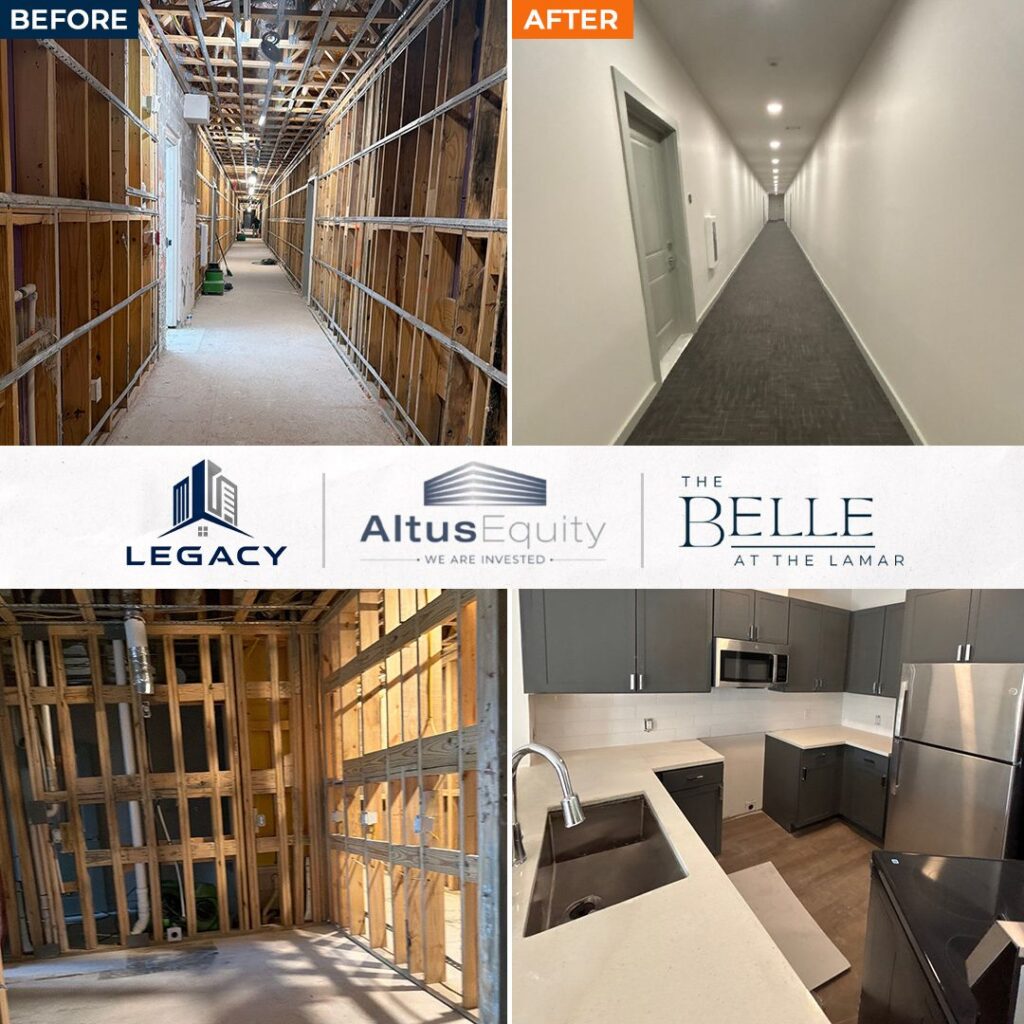
Legacy Restoration completed a large-scale multifamily water damage restoration project at The Belle at the Lamar in Oxford, Mississippi, after a winter freeze affected 36 apartment units across four floors. Legacy was selected to coordinate the reconstruction effort and restore the damaged units to their pre-loss condition.
Working with Altus Equity Group, Inc., Legacy managed the project from assessment and documentation through reconstruction and final trade closeout. The approximately $3.4 million project required careful coordination among specialized trades, suppliers, insurance representatives, and property stakeholders.
Project Overview
The Belle at the Lamar is a newly constructed, 98-unit apartment community in Oxford, Mississippi. Following severe winter weather, water damage affected more than one-third of the property’s units.
Each apartment required an individualized repair scope based on verified field conditions and insurance approvals. Legacy Restoration developed and managed a coordinated reconstruction plan that addressed the damage while maintaining consistency across the property.
Project Details
Client: Altus Equity Group, Inc.
Property: The Belle at the Lamar
Location: Oxford, Mississippi
Timeline: February through July 2026
Affected Units: 36 apartments across four floors
Project Type: Freeze and ice storm water damage reconstruction
Estimated Project Value: Approximately $3.4 million
Large-Scale Water Damage Reconstruction
Multifamily water damage restoration requires more than repairing individual apartments. Work must be carefully planned across multiple units and floors while accounting for building codes, insurance requirements, material availability, subcontractor schedules, and occupancy needs.
Legacy Restoration managed a comprehensive, multi-trade reconstruction program that included:
Assessment and documentation of 36 affected units
Interior reconstruction across all four floors
Repair and replacement of damaged interior finishes
Cabinetry and countertop installation
Flooring and tile replacement
Procurement and coordination of replacement appliances
Management of specialized subcontractors and material deliveries
Insurance-aligned estimating, documentation, and project billing
Challenges of the Multifamily Restoration Project
The size and complexity of the loss created several logistical challenges. Reconstruction needed to progress across dozens of apartments without sacrificing workmanship or creating unnecessary scheduling conflicts.
Key challenges included:
Coordinating reconstruction across 36 units and four floors
Establishing individual repair scopes based on insurance approvals
Verifying damage and required repairs in each unit
Maintaining consistent materials and finishes throughout the community
Managing multiple subcontractors, suppliers, and installation schedules
Meeting a time-sensitive leasing and occupancy schedule
With several trades working throughout the property, clear communication and detailed scheduling were essential to keeping the project moving.
Legacy Restoration’s Coordinated Approach
Legacy assigned a dedicated project team to oversee scheduling, communication, documentation, and quality control throughout the reconstruction process.
Work was sequenced across the property’s four floors to keep multiple trades moving efficiently while reducing scheduling conflicts. Specialized subcontractors were coordinated for cabinetry, countertops, flooring, and tile installation.
Legacy also managed the procurement and delivery of replacement appliances and other materials needed to return the units to their pre-loss condition. Detailed field documentation and insurance-aligned estimates helped maintain a clearly defined restoration scope throughout the project.
This coordinated approach allowed property representatives, subcontractors, and suppliers to work from the same project plan while supporting consistent quality across all 36 units.
Project Outcome
By July 2026, the project had advanced through large-scale reconstruction and into final trade closeout. The affected apartments were restored through a consistent, multi-trade repair program that remained aligned with approved insurance scopes and applicable building codes.
The completed work included restored living areas, kitchens, flooring, cabinetry, countertops, appliances, and interior finishes. Legacy’s coordinated project management helped the property move toward full recovery while minimizing disruption to leasing and occupancy operations.
The Belle at the Lamar project demonstrates Legacy Restoration’s ability to manage complex commercial water damage reconstruction involving dozens of units, multiple floors, specialized trades, and demanding completion schedules.
Commercial and Multifamily Water Damage Restoration
Large water losses can quickly affect multiple units, building systems, and property operations. Legacy Restoration provides coordinated commercial and multifamily restoration services designed to help property owners and managers respond, restore, and rebuild.
Our team manages projects from detailed assessment and reconstruction planning through trade coordination, documentation, and final closeout.
If your commercial or multifamily property has experienced water, fire, mold, or storm damage, Legacy Restoration is available 24/7.